
Responsible AI editing means using AI only within the assignment rules, keeping the student in control of the argument, verifying every claim and source, and being transparent when disclosure is required.
Responsible AI editing workflow
Read the policy before opening a tool
Check the syllabus, assignment prompt, LMS note, or instructor guidance. If the rule is unclear, ask.
Define the allowed job
Use AI for a narrow editing job such as clarity, grammar, or sentence flow, not for replacing your analysis.
Keep draft evidence
Save outlines, notes, source annotations, and versions so you can show how the work developed.
Verify every output
Check facts, citations, quotations, and the level of certainty before submitting.
Disclose when required
If the class requires attribution or an AI-use note, include it clearly and honestly.
Lower-risk vs higher-risk AI editing
| Use case | Lower risk when allowed | Higher risk |
|---|---|---|
| Grammar | Fixing punctuation or sentence clarity | Changing the argument without review |
| Brainstorming | Generating possible angles to evaluate | Submitting AI ideas as your own analysis |
| Humanizing | Improving readability after you write | Hiding AI-generated work from a policy |
| Sources | Organizing your own source notes | Inventing citations or summaries |
Responsible editing prompt
Edit this paragraph only for clarity and sentence flow. Preserve my claim, evidence, citations, tone, and level of certainty. Do not add new facts. After editing, list any changes that might affect meaning.
Responsible AI editing FAQs
When should students disclose AI use?
Disclose AI use when the assignment, syllabus, institution, instructor, or citation style requires it. If unclear, ask before submitting.
What AI use is usually lower risk?
Brainstorming, grammar support, and clarity edits may be lower risk when allowed. Generating core analysis, citations, or final answers is higher risk.
Research basis
Student-facing reference for checking syllabus rules and permission before using AI on assignments.
Academic integrity reference for disclosure, verifying AI output, and using evidence beyond detector scores.
Reference for clarity-first humanizing, transparency, meaning preservation, and academic caution.
Reference for using detector reports as conversation starters and looking at process evidence.
About Humanizer.help Editorial Team
The Humanizer.help editorial team turns AI writing, detector, ESL, and academic integrity research into practical student editing workflows.
Related Articles

AI Detection for Students: What Detector Scores Mean and What They Do Not Prove
A practical guide to reading AI detector scores as signals, not proof, with a safer review workflow for students.

Turnitin and GPTZero Guide for Students: Read AI Reports Carefully
Learn how to interpret Turnitin and GPTZero signals without treating any detector score as automatic proof of misconduct.
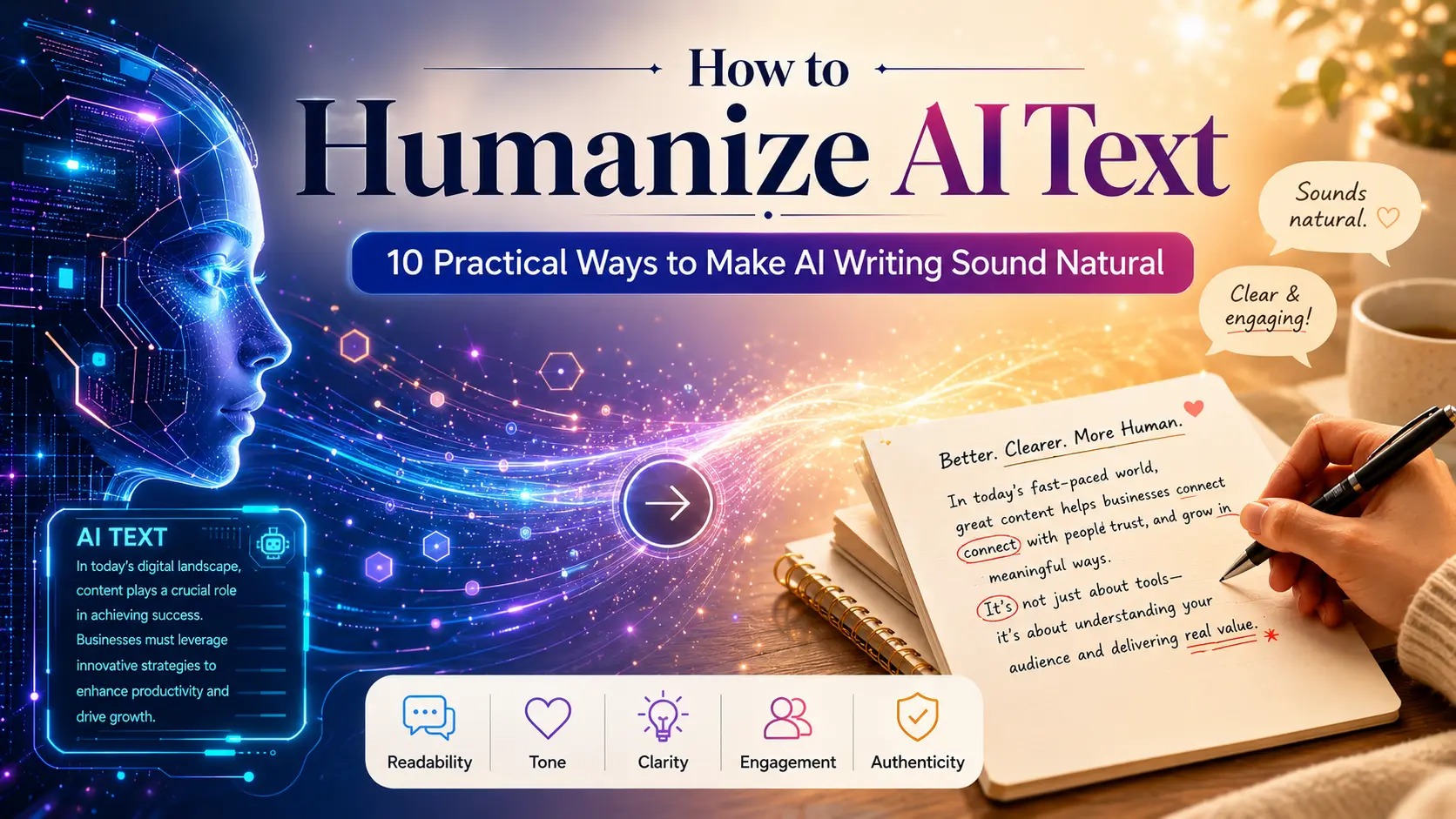
How to Humanize AI Text: 10 Practical Ways to Make AI Writing Sound Natural
A practical editing workflow for students and writers who want AI-assisted drafts to sound natural while preserving meaning, accuracy, and responsible use.